Cyber Security Insights January 2026

Cyber Security Insights January 2026

Written by Bryan Altimas

Happy New Year!

Here is the first edition of Cyber Insights for 2026. The cybersecurity threatscape continues to evolve at supersonic speed. This month we look at:

  • Identity first protection
  • AI driven cyber threats in 2026
  • Cyber resilience is not about stopping attacks

Identity First Protection

This is not just about phishing.

It’s about:

  • Synthetic identities which are AI-generated profiles that bypass basic onboarding checks
  • Machine identities including containers, bots, service accounts with no expiry and full access
  • Session hijacking abusing access tokens to skip authentication entirely
  • MFA bypass tools now commoditised in the cybercrime ecosystem

Your weakest link might not be a person. It could be a forgotten automation script with admin access.

Why “Zero Trust” Isn’t a Buzzword

Zero Trust is not a product. It is a principle: don’t trust, verify every time.

And at its heart? Identity.

But here is the friction. Many companies think they have “done” Zero Trust because they rolled out MFA.

That’s a dangerous assumption.

  • Do you know who and what has access to what, and why?
  • Can you verify that only the right identities can access critical data?
  • Can you detect and respond when that access is abused?

If the answer is “not really,” you are not alone. But you are also not secure.

What Identity First Security Looks Like in Practice

Identity first security is not just IAM tooling.

It is strategy. Visibility. Continuous validation.

Here is what businesses need to prioritise:

Unified Identity Governance Tie human and machine identity management into one fabric. Apply the same rules and risk scoring across the board.

Least Privilege Access Access should shrink, not expand, over time. Use role-based and attribute-based access controls to limit exposure for humans as well as bots and machines.

Session & Token Management Audit and expire stale sessions. Monitor for token misuse. Do not leave the digital door propped open.

Behaviour Based Anomaly Detection Do not just ask who or what accessed a system. Ask how unusual that access was and trigger alerts accordingly.

Lifecycle Hygiene Provisioning is easy. Deprovisioning is where breaches happen. Build processes to detect and close orphaned accounts fast.

MFA, but Smart MFA everywhere may not always be the answer. Adaptive authentication and phishing resistant methods (like passkeys) should be your baseline.

Identity is a Business Risk Not Just an IT Problem

This is not just for your IT team to handle.

Your finance team uses cloud platforms. Your sales team stores client data. Your developers manage environments with production access.

Everyones identity is a potential risk surface and that makes identity first security a board-level issue.

In M&A due diligence. In compliance audits. In client trust. In operational continuity.

Bottom Line: Identity-First Security is a Strategic Imperative

If you’re scaling fast, handling sensitive data, or working with regulated industries your identity strategy must mature alongside your business.

You cannot grow securely if you:

  • Do not know who has access
  • Cannot see when identity is abused C
  • Cannot revoke access fast

The Call to Action

  1. Map your identity landscape
  2. Prioritise visibility and hygiene
  3. Treat identity as a tier-1 business risk
  4. Build identity-first principles into security architecture reviews, vendor assessments, and AI deployments

Because trust should be earned. And verified. Every time.
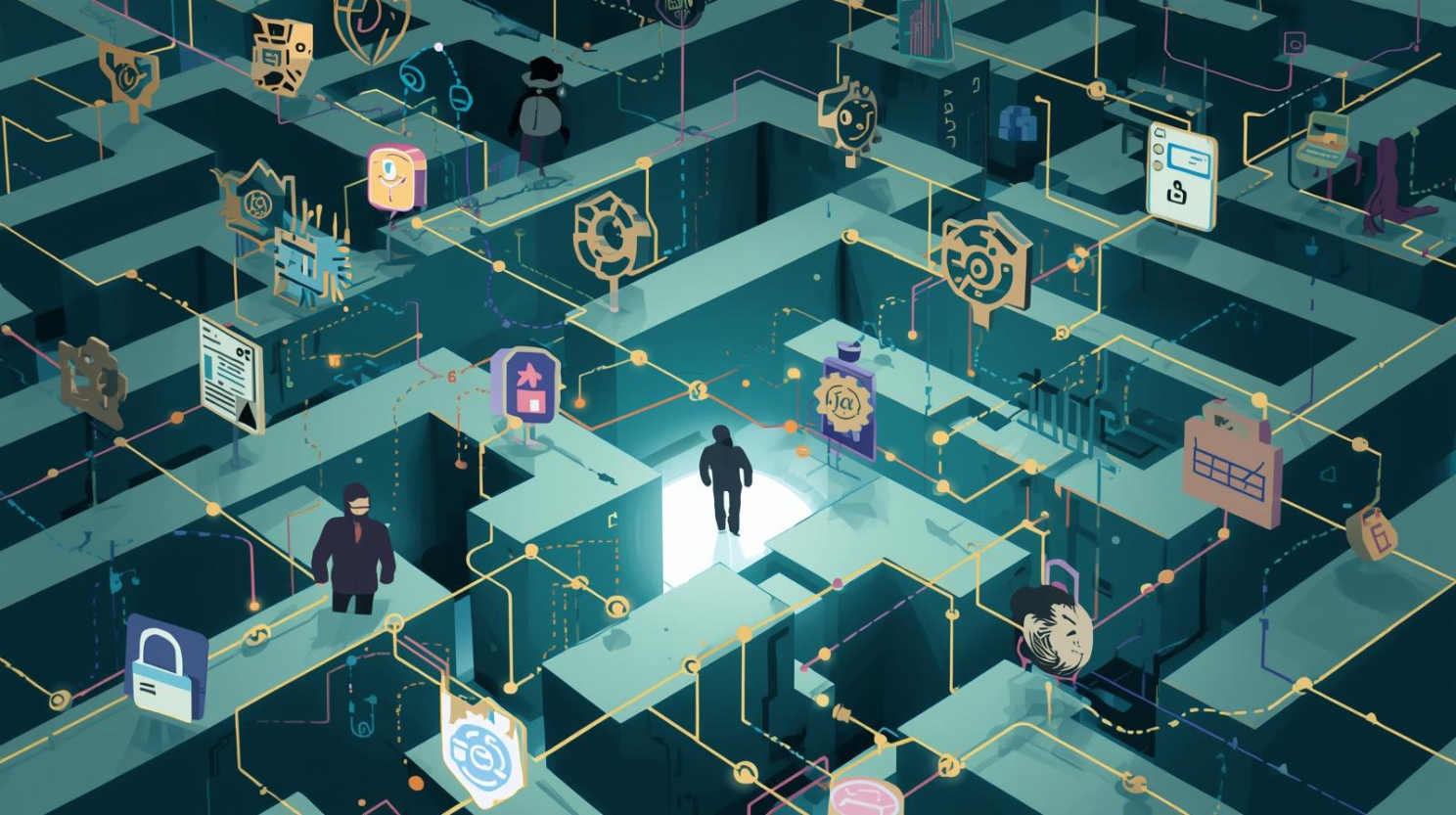
An amusing, conceptual digital illustration depicting a complex, interconnected digital network as a labyrinth. Visible within the labyrinth are abstract representations of synthetic identities (e.g., flickering, incomplete personas), machine identities (e.g., rigid, automated gears and code blocks), session hijacking (e.g., shadowy figures subtly altering pathways), and MFA bypass tools (e.g., broken or bypassed locks). 

The overall aesthetic is slightly whimsical yet convey a sense of underlying complexity and potential vulnerability, with a colour palette that suggests a blend of technology and intrigue. The composition is framed to emphasise the vastness and intricate nature of the threat landscape with a subtle spotlight on a key area of weakness.
AI generated threat landscape image

AI-Driven Cyber Threats in 2026: More Than Just a Tech Problem

We are past the point where AI is "emerging." It’s here embedded in operations, decisions, and risk landscapes.

While it is easy to focus on the upsides of automation, efficiency, insight AI is also transforming the threat environment.

For CISOs and business leaders, the message in 2026 is clear:

  • AI is not neutral.
  • It can protect you.
  • Or it can be weaponised against you.

Autonomous Attacks: The Rise of Agentic AI

We are now seeing real-world use of autonomous AI agents in cyber attacks.

These are not static scripts. They are goal-oriented, adaptable software entities that:

  • Self-initiate scans
  • Chain exploits together
  • Exfiltrate data
  • Cover their own tracks

No human in the loop. Just agents operating with minimal oversight and potentially enormous impact.

Case in point: Microsoft Threat Intelligence noted autonomous recon bots scanning corporate infrastructure, triggering payloads only when certain configurations were detected.

This is a shift from attack-as-code to attack-as-intent.

AI for Defence vs AI for Offence

Here’s the paradox: The same technology that helps you defend can be flipped to attack.

Defenders are using AI to:

  • Detect anomalies
  • Correlate alerts
  • Prioritise threats
  • Respond faster

But attackers are using AI to:

  • Generate evasive malware
  • Optimise phishing campaigns
  • Create synthetic identities
  • Bypass traditional defences with dynamic payloads

And they are moving faster. Why?

Because attackers don’t need to worry about compliance, ethics, or uptime. Also, with AI they can reconnaissance, target and execute faster than ever.

Productised AI Abuse: It’s Now a Service

We’re seeing the industrialisation of AI-based attacks.

Threat actors are packaging:

  • AI-enhanced phishing kits
  • Deepfake generation-as-a-service
  • Autonomous vulnerability scanners
  • Custom LLM jailbreak toolkits

…and selling them on dark web markets. No expertise required. Just a wallet and intent.

Example: A known ransomware group recently bundled an AI-powered chat agent into their victim portals designed to negotiate payment using emotionally persuasive tactics.

What the Board Needs to Know

If you're sitting on a board or leading a fast-growing business, AI risk isn’t just about hallucinations or ethics.

It’s about:

  • Operational risk when autonomous systems can act unpredictably
  • Legal risk if AI systems breach privacy, copyright or compliance
  • Reputational risk when AI is used to manipulate, deceive, or damage
  • Security risk when AI tooling becomes a vector or enabler of attack

AI is no longer a tool you "add on" it's a risk domain you must govern.

What CISOs and CTOs Should Be Prioritising in 2026

If you haven’t already, now’s the time to:

  1. Map AI usage across the business Where are AI systems being used (internally and externally)? Who owns them?
  2. Perform AI risk assessments Treat AI systems like critical assets. Evaluate their exposure, permissions, and attack surface.
  3. Secure model inputs and outputs Prompt injection, data poisoning, and model evasion attacks are real and preventable with the right controls.
  4. Apply secure development and deployment principles From LLMs to vision models, secure configuration, testing, and monitoring must be standard practice.
  5. Develop AI incident response playbooks AI-generated harm won’t look like traditional malware. Are your teams prepared?
  6. Establish AI governance frameworks Not just for ethics. For security, accountability, and traceability.

Final Thought

The conversation around AI in cyber security is no longer about if it will affect your business.

It is about how you're managing that impact.

Because in 2026:

  • AI can scan your network faster than your team can log in.
  • It can craft attacks more convincingly than a seasoned social engineer; and
  • It can be deployed without ever touching your infrastructure via a third-party you trusted.
Article content
AI generated image about AI driven cyber threats

Cyber Resilience: It’s No Longer About Just Stopping Attacks

In 2026, the security conversation has matured.

It’s no longer “How do we stop everything?” It’s “How do we survive, adapt and bounce back fast when something inevitably gets through?”

Welcome to the era of cyber resilience.

Not a buzzword. Not just PR gloss. But a strategic necessity for any business that relies on digital operations which, let’s be honest, is all of us now.

Assume Breach. Plan Accordingly.

Every CISO we speak to whether in tech, finance, healthcare or legal tells us the same thing:

“We can’t guarantee prevention. But we can control what happens next.”

This mindset shift is long overdue. We now build strategies that assume compromise, and focus on:

  • Containment
  • Continuity
  • Rapid recovery
  • Stakeholder trust

Because if your security strategy starts at “stop the threat”, you’ve already lost half the battle.

Continuous Threat Exposure Management (CTEM): What Matters, Not Just What’s Noisy

One of the biggest challenges facing modern security teams? Signal overload.

Thousands of vulnerabilities, misconfigurations, alerts. But where’s the actual business risk?

That’s where CTEM comes in: Continuous Threat Exposure Management.

CTEM helps you:

  • Assess real-world risk across assets
  • Prioritise exposures by likelihood and impact
  • Track improvements over time
  • Focus on what matters to your operations, not just your dashboards

Think: fewer alerts, more decisions.

CTEM does not replace threat intelligence it makes it usable.

The Hidden Threat of Tool Sprawl

Let us be candid most organisations have too many security tools.

Point solutions. Overlapping platforms. Different dashboards. Conflicting alerts. Multiple vendors, each promising full visibility… but none delivering it alone.

  • What starts as defence becomes dilution.
  • Controls do not talk to each other.
  • Response times suffer.
  • Gaps emerge between tools and attackers exploit the gaps.

This is the tool sprawl trap.

And in resilience terms? It is high risk.

The 2026 trend we’re seeing is consolidation and integration. Not fewer controls but smarter ones. Interconnected. Automatable. Measurable.

Security teams do not need more tech. They need better-aligned tech with clear visibility from boardroom to endpoint.

Resilience Isn’t a Product. It’s a Posture.

You cannot buy cyber resilience. You build it.

And that means shifting from reactive firefighting to proactive planning across the business.

Here’s how resilient organisations are thinking in 2026:

  • They test failure regularly. Tabletop exercises, red team simulations, playbook drills.
  • They track metrics that matter mean time to detect, contain, and recover. Not just how many attacks were “blocked”.
  • They govern risk like finance with ownership, accountability, and business context.
  • They embed resilience into procurement assessing vendor resilience, not just price and features.
  • They measure impact because boards do not want activity. They want assurance.

Cyber Resilience = Governance + Measurement + Strategy

Let’s break that down:

  • Governance Who owns the risk? Who makes the decisions? Are roles clear when pressure hits?
  • Measurement How fast can you spot a breach? Restore operations? Communicate with clients? Not hypothetically but in real terms.
  • Strategy Are your investments aligned to risk? Are you building resilience into transformation plans or retrofitting it after?

Final Thought: If You Cannot Prove It, You Do Not Have It

In boardrooms across the UK and beyond, cyber is no longer a technical report buried in AOB. It’s a core line item.

And the question that’s being asked more than ever in 2026 is this:

“If we had a serious incident tomorrow, how would we recover and how quickly could you show us the impact?”

If the answer is silence, or “it depends” that is your resilience gap.

Where to Start?

  • Map your crown jewels data, systems, processes, people.
  • Test your response not just IT, but legal, risk, compliance, PR, and leadership.
  • Consolidate tools that are not earning their keep.
  • Adopt CTEM to prioritise by risk, not noise.
  • Set impact-driven KPIs and make them board-visible.

Because resilience is not about being bulletproof. It’s about being ready to take the hit and still stand up.

Let’s stop chasing perfection. Let’s start building survivability.

Article content


Join the Newsletter
Insights from Riverside Court Consulting Ltd into cyber security, data protection and regulatory compliance
Subscribe Now
Categories
Recent Posts

Cyber Security is serious. But it shouldn't be confusing and stressful

crossmenuarrow-right